German cockroach infestations in residential settings rarely resolve through standard perimeter sprays or retail aerosol foggers, which scatter aggregated populations deeper into drywall cavities and behind cabinetry.…
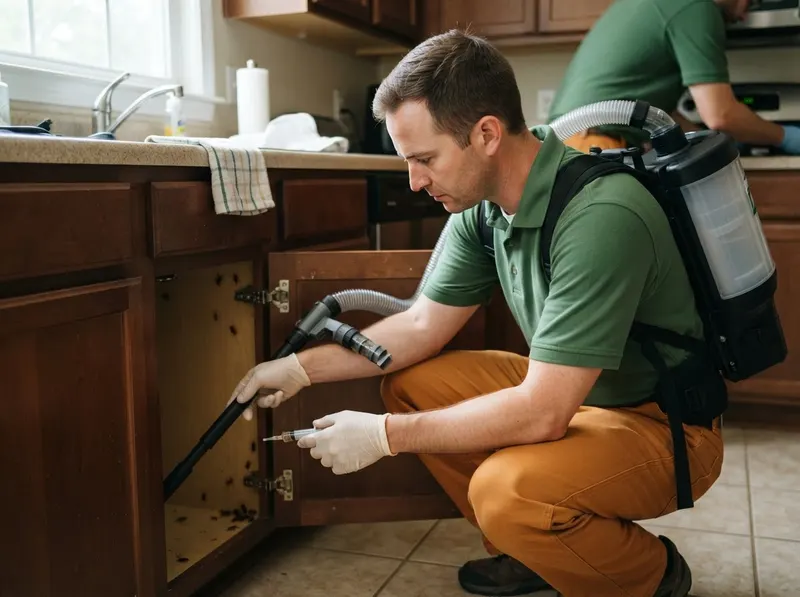
German cockroach infestations in residential settings rarely resolve through standard perimeter sprays or retail aerosol foggers, which scatter aggregated populations deeper into drywall cavities and behind cabinetry. The multi-stage protocol begins with mechanical reduction: technicians utilize specialized HEPA-filtered vacuums to strip hundreds of breeding adults, nymphs, and loose egg cases directly out of dark, warm micro-habitats. Common extraction points include refrigerator compressor coils, dishwasher kickplates, microwave sub-frames, and the unsealed gaps where copper plumbing enters sheetrock beneath kitchen sinks. Removing physical biomass immediately cuts allergen loads, droppings, and breeding volume without saturating food-preparation surfaces in lingering airborne chemicals.
Following physical extraction, precision gel baits containing active ingredients such as indoxacarb or dinotefuran are applied in discrete, pin-head quantities inside cabinet hinges, hollow drawer slides, and electrical junctions. These formulations mimic preferred food sources and are paired with juvenile hormone mimics (insect growth regulators) like pyriproxyfen, which prevent surviving nymphs from developing functional reproductive anatomy or shedding their exoskeletons. Unlike synthetic pyrethroid sprays that leave heavy residues and cause chemical repelling, systemic baits rely on natural coprophagy and necrophagy, meaning feeding roaches carry the control material back into deep structural voids to eliminate hiding insects that never leave the inner walls.
Older homes with moisture-retaining crawl spaces in Dilworth, Elizabeth, and Plaza Midwood frequently experience harborage migration between humid basements and warm kitchen circuitry, while modern multi-family apartments in South End and NoDa face cross-wall movement through shared pipe chases. In high-density single-family communities across Ballantyne, University City, Cotswold, and Myers Park, clean pantry maintenance often fails to prevent an introduction, as German roaches typically enter via cardboard shipping boxes, grocery sacks, or pre-owned kitchen electronics. The trade-off between mechanical extraction and chemical spraying is immediate spatial safety: targeted baiting takes 7 to 14 days to fully extinguish secondary life cycles, but it preserves indoor air quality for toddlers and companion animals while preventing chemical tolerance shifts.
1. Initial thermal and acoustic inspection locates concentrated harborage pockets behind heat-generating kitchen appliances and sub-counter plumbing penetrations.
2. Specialized HEPA vacuuming extracts active populations, loose shed skins, and visible egg cases to eliminate reproductive density on contact.
3. Micro-dot bait placements and insect growth regulators are applied inside interior structural crevices, completely isolated from food-prep surfaces and household pets.
4. A mandatory follow-up assessment occurs at the 14-day mark to intercept newly emerged nymphs before reproductive maturity is reached.
Every job gets a firm, written price after a free on-site visit.
Tell us about your german cockroach multi-stage vacuum and bait elimination job in Charlotte and we'll send a clear, written quote, usually the same day.
 SafeHaven Pest Control